
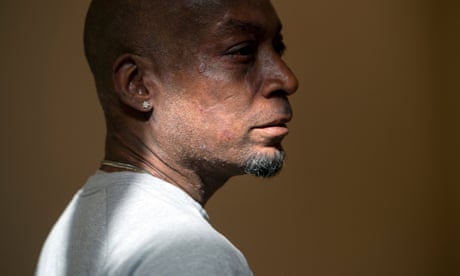
A California judge has rejected Monsanto's interest to topple a milestone jury decision which found that its well known herbicide causes malignancy.
The judge's decision on Monday to a great extent favored Dewayne "Lee" Johnson, a dad of three and previous school maintenance man, who won a $289m grant over the mid year in the wake of claiming that his presentation to Roundup weedkiller gave him growth. Amid the preliminary, the first of its kind, the 46-year-old likewise affirmed that Monsanto had neglected to caution him of the dangers of utilizing its item.
Monsanto, now claimed by Bayer, the German pharmaceutical organization, documented an interest of the decision, which said the organization was in charge of "careless disappointment", knew or ought to have realized that its item was "hazardous", and had "acted with vindictiveness or persecution".
Monsanto battled to upset the decision, contending the proof was lacking. The San Francisco predominant court judge Suzanne Bolanos had proposed in an underlying composed deciding this month that she was thinking about giving another preliminary. However, she eventually denied Monsanto's ask. In any case, she has ruled to decrease correctional harms from $250m to $39m.
The judge said in her decision Monday that if Johnson did not acknowledge the lower correctional harms, she would arrange another preliminary for Monsanto.
Johnson's legal counselors said in an announcement Monday that the "decrease in corrective harms was outlandish" and that his lawful group, Baum Hedlund and the Miller Firm, was "gauging the alternatives".
They included, "The proof displayed to this jury was, truth be told, overpowering … Today is a triumph for our lawful framework. We care profoundly for Lee and his family, and we are eager to impart this essential win to them and each one of the individuals who upheld this case."
Bayer said in an explanation that the decrease in harms was a "step in the correct heading", however that the organization intended to document another interest of the decision.
The August decision was a noteworthy triumph for campaigners who have long battled Roundup, the most generally utilized herbicide on the planet. Studies have over and again connected the glyphosate substance, sold under the Roundup and Ranger Pro brands, to non-Hodgkin lymphoma (NHL), a kind of blood disease. In 2015, the International Agency for Research on Cancer ruled to characterize glyphosate as a plausible human cancer-causing agent.
Johnson's legal counselors assist contended that interior Monsanto messages revealed in the suit recommended that the organization has more than once attempted to smother basic research throughout the years while "secretly composing" logical reports great to glyphosate.
A huge number of offended parties the nation over have made comparable lawful cases, charging that glyphosate presentation caused their tumor or brought about the passings of their friends and family.
Monsanto and Bayer have more than once demanded that glyphosate is sheltered to utilize and does not cause tumor.
A week ago, four jury individuals addressed the Guardian about the judge scrutinizing their consistent choice, encouraging her to enable the decision to stand.
In an ongoing meeting, Johnson advised the Guardian that he needed to see his case have a long haul affect, including new limitations and naming for the herbicide.
"I trust [Monsanto] gets the message that individuals in America and over the world are not insensible. They have officially done their very own exploration," he stated, including: "I'm trusting that it snowballs and individuals truly get the image and they begin to settle on choices about what they eat, what they shower in their homesteads."
Johnson could have a long time to live and isn't relied upon to make due past two years.
0 comments:
Post a Comment