
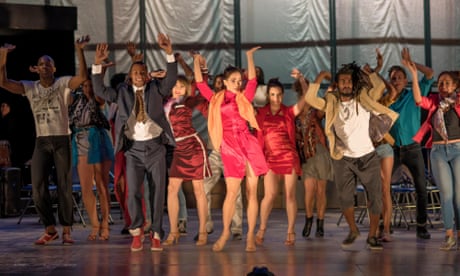
Carlos Acosta is praising 30 years as an expert artist, an astonishing three decades that have taken him from the Havana avenues to the Royal Ballet, and after that on to movement, delivering, composing, acting and turning into the subject of a biopic, Yuli. This blended bill is a photo of where he is presently, no thinking back. Having resigned from traditional artful dance, 45-year-old Acosta is working with contemporary choreographers to cut another course through move.
Another piece, Mermaid, by Sidi Larbi Cherkaoui for Acosta and Marta Ortega sees Acosta in to a greater extent a supporting job (he was dependably an extraordinary accomplice). Ortega gets a handle on an unfilled wine glass as her fluid body tangles itself drunkenly around his edge. At any rate, I accepted Ortega's character was flushed, being held up by her tolerant darling, yet as per the program she's as far as anyone knows a mermaid out of water. Whatever the translation, it's an engaging pas de deux. Acosta's solid, balanced body doesn't have Ortega's liquid flexibility however he generally moves like it is important.
Acosta has been an awesome encourager of different artists, with an eye for ability, and he's joined here by the youthful individuals from his very own Havana-based organization, Acosta Danza. They're a flexible team, straight-confronted and impassively athletic in Goyo Montero's Alrededor No Hay Nada, a distinct, striking accumulation of brisk stop-begin phrases. It's set to Spanish content (an interpretation may have been valuable), with the ladies looking Fosse-eque in dark shorts, bowler caps and steps like outcry marks.
Be that as it may, they're taking care of business when their identity comes through, in Christopher Bruce's Rooster, set to the Rolling Stones, or the more lively areas of Acosta's Carmen. Chicken is a propelled decision for Acosta. Best known as one of Rambert's mark pieces, it treads a dubious line between Bruce's demanding movement and the rock'n'roll desert of the Stones, however Acosta conveys added swagger and relish to the stage. He claims it. The organization are for the most part brimming with assault, lines fitting properly with verve, and they generally seem as though they're having a ton of fun.
As they do in an uproarious flamenco break in Carmen, a work initially arranged by Acosta for the Royal Ballet in 2015 and now improved, to improve things. They stamp and move on tables with legitimate Hispanic hotness. You don't take care of business at the Royal Ballet. The work's combination of structures – contemporary heartiness, Latin energy, Carmen on pointe – additionally works better outside the convention of the Opera House. Acosta needs to engage (not generally a given in move) and when he touches base in front of an audience as toreador Escamillo, he gets some expressive dance control moves to concrete his status. His movement has some decent manners of expression and set pieces, despite the fact that it's troublesome for any choreographer to keep sentimental pas de deux perpetually innovative.
The Albert Hall is anything but an awesome setting for move – not slightest on the grounds that on the off chance that you sit in the slows down you can't see anybody's feet – however the scale and dramatization of Carmen preferred fills the tremendous space over alternate pieces, colossally helped by the nearness of a live symphony.
It's a charming night that is less the summing up of 30 years, however the following stage advances for an entertainer with bounty more to state and do.
0 comments:
Post a Comment