
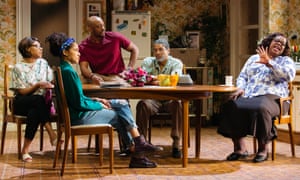
In 1957, Moon on a Rainbow Shawl by Trinidad-conceived screenwriter Errol John won a playwriting challenge composed by the Observer – however its guaranteed West End run was dismissed by makers who considered it inadmissible for groups of onlookers. They didn't figure it would offer tickets, so after a year it opened at the Royal Court. We can just ponder what the scene of dark British performance center would look like today if the West End generation had proceeded.
Presently 60 years on, two raving successes by dark British dramatists have exchanged toward the West End without a moment's delay: Arinzé Kene's Misty is as of now at Trafalgar Studios, where Natasha Gordon's Nine Night will open in December. First arranged at the Bush and the National Theater individually, the two hits are on course to augment the picture of what a West End dramatist resembles.
Gordon has been hailed as the principal dark British female writer to have a play in the West End. In any case, she asks: "How might I commend that in 2018? On the off chance that I need to accept that as an individual accomplishment, at that point beyond any doubt, yet what does that do towards propelling us and opening the ground for the more youthful age?"
Sitting with her at a bistro in north London, Kene gestures enthusiastically. Much is being made of what number of – or what a limited number of – dark British dramatists have hit the West End before them. It's over a long time since Kwame Kwei-Armah's Elmina's Kitchen was arranged at the Garrick. The Big Life, a 2004 ska melodic, had a score by dark artist Paul Joseph, with book and verses by white producer Paul Sirett. Beam Harrison Graham's play Gary completed a 1990 keep running at the Arts theater. Mustapha Matura's Play Mas exchanged toward the West End from the Royal Court in the 70s. There are still holes ever of theater so it's difficult to know precisely who started things out – and how helpful is our distraction with "firsts" in any case?
"I feel like each time we have that discussion it discredits what has gone previously," Gordon says, shaking her head. "The work that has been finished by such a significant number of dark writers, dark venue gatherings, organizations that existed in the 80s yet shut because of an absence of help. We have these discussions about 'the first' as if there's a sudden blast or it's a prevailing fashion, and I don't think it causes us to manage."
Kene and Gordon have never met yet welcome each other warmly. He "adored" Nine Night; she reserved for Misty's premiere night when she caught wind of the exchange. Gordon has Jamaican legacy and was conceived in London in 1975, while Kene was conceived in Nigeriain 1987 – his family settled in London when he was a kid.
An exemplary family dramatization, Nine Night spins around the Caribbean custom of facilitating visitors at a sort of expanded wake for nine days after a demise. Gordon depicts the play as thinking about the convention: "For what reason do despite everything we have it, what does it mean, where does it originated from? That was particularly roused by my experience when my grandmother passed away." Gordon will surprisingly be going up against the lead job of Lorraine, the most established little girl at the focal point of Nine Night, in the West End. "It came down to reasonableness at last, having a short practice process and not every person having the capacity to return."
0 comments:
Post a Comment